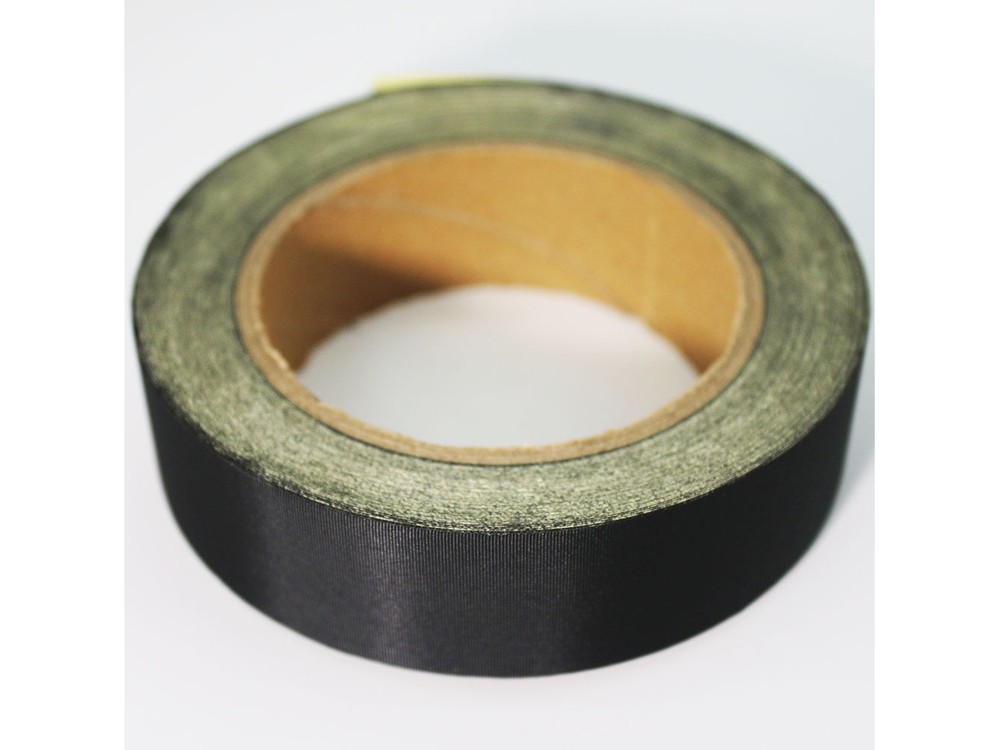
How to Source and Approve Automotive Fleece Tape for Interior Harness NVH
A buyer's route to approving one automotive fleece tape model for an interior harness: contact pair, RFQ, model evidence, sample build, trial lot and repeat-order controls.
Automotive fleece tape can cushion a harness where it meets trim, a bracket, a clip or another component, but a soft surface alone does not prove the final assembly will be quiet. Buzz, squeak and rattle depend on the exact tape, the wrapping build, the route, the free span, the contact pressure, the surface finish, the temperature, the humidity, the ageing and the excitation.
Approve one model for one application, in stages: define the interface, issue a comparable RFQ, review model-level evidence, build traceable samples, validate on the target component or vehicle, approve a trial lot, then write repeat-order controls. EJOY coordinates the commercial and sample steps; final suitability stays with your programme.
1. Start with the contact pair and the symptom
Do not start from the phrase “anti-rattle tape”. Start from the physical interface: a harness tapping a metal bracket, sliding on textured trim or moving inside a clip can each need different cushioning, friction, thickness and wrapping.
| RFQ input | What to record | Why it matters |
|---|---|---|
| Contact pair | Wrapped bundle against the exact trim, metal, clip, foam or other surface | Sets the real friction, impact and adhesion environment |
| Route and gap | Bundle diameter, free span, bend, branch, clip spacing, available clearance | Controls movement, compression and installation space |
| Noise symptom | Buzz, squeak, rattle, tapping or rubbing; when and where | Stops one generic claim covering different mechanisms |
| Excitation | Road input, speaker, motor, door slam, thermal movement, assembly tolerance | Defines a repeatable comparison condition |
| Environment | Temperature, humidity, contamination, ageing, service access | Can change adhesive anchorage and surface behaviour |
| Acceptance | Customer test, listening rule, sensor metric, defect limit, approval authority | Turns the trial into a purchase decision |
2. Freeze the exact model before asking for a price
Fleece, felt, flock and anti-rattle are useful search terms, not guaranteed synonyms. The quotation has to name the backing construction, the adhesive, the model, the revision and the roll presentation. For reference, the manufacturer’s datasheets describe our fleece models as napped (brushed) woven PET with a rubber or acrylic adhesive. If a competing quotation says nonwoven, felt or flock, treat it as a different construction until its datasheet says otherwise.
- State whether the backing is nonwoven, woven and napped, flocked, needle-punched or a composite.
- State polymer identity, adhesive family, colour, and which surface is coated.
- Define total thickness with the method and applied pressure where compression matters.
- Record width, length, core, winding direction, splice rule, liner and packaging.
- Link the sample label, the signed datasheet, the report and the quotation to the same model and revision.
3. Issue a comparable RFQ
| RFQ block | Minimum buyer field | Supplier response to require |
|---|---|---|
| Application | Vehicle zone, route, contact pair, bundle, noise symptom | Candidate model and the reason for it |
| Construction | Required backing type, thickness window, adhesive, colour | Exact supplied construction and controlled revision |
| Roll format | Width, length, core, winding, splice, labelling | Standard or custom capability, with a tolerance proposal |
| Evidence | The named temperature, peel, shear, fogging, odour, flame, abrasion or NVH requirement | Report list with model, method, date and scope |
| Approval | Sample quantity, build instruction, trial-lot size, decision date | Traceable sample and trial-lot plan |
| Commercial | Annual volume, delivery schedule, destination, Incoterm request | MOQ, price breaks, lead time, packing and shipment route for that specification |
| Change control | Notification triggers and approval lead time | Supplier commitment, deviation route, record retention |
4. Review the evidence by exact model
Keep company, model, lot and assembly claims apart. The manufacturing-site IATF 16949 certificate supports the quality-system scope on the certificate; it does not classify every tape. A family page does not replace a signed model datasheet. A coupon result does not replace a wrapped-harness or vehicle test.
| Evidence requested | Fields to verify | Buyer decision |
|---|---|---|
| Signed datasheet | Model, revision, construction, units, tolerances, status of each value | Can this become the purchase specification? |
| Test report | Sample identity, method, conditions, result, date, laboratory | Does the report cover the construction quoted? |
| System certificate | Holder, site, scope, issuing body, validity | Does it support the responsible manufacturing site? |
| RoHS or REACH declaration | Exact product or material scope, revision, date | Does it cover the shipment model? |
| Lot document | Lot identity, release fields, sampling, disposition | Can incoming material be traced and released? |
| Customer approval | Model, build, programme, conditions, change status | Is this programme still inside its approval? |
What the manufacturer’s datasheets state for our three fleece models
These are the manufacturer’s published records, reproduced here for convenience; they are not EJOY test data. The full rows, with revision dates, are on the fleece tape datasheets.
| Model | Thickness | Temperature | Other values printed on the datasheet |
|---|---|---|---|
| K8030 | 0.28 ± 0.03 mm | −40 to +105 °C (LV 312) | Noise damping Class C, 5 to 10 dB or less (LV 312); scrape abrasion Class B, 100–499 cycles (ISO 6722); flammability Class B, self-extinguishing (ISO 3795); peel ≥ 3 N/cm (EN 1939); tensile ≥ 30 N/cm and elongation ≥ 20 % (EN 14410) |
| K8026-00 | 0.240 ± 0.030 mm | −30 to +150 °C | Peel ≥ 12 N/25 mm (180°); holding > 24 h; flame grade printed as “class C” without naming the standard, so it is not presented as an LV 312 class |
| Fleece 0.30 mm (unnumbered datasheet) | 0.300 ± 0.03 mm | 0 to +105 °C | Peel > 10 N/25 mm (180°); holding > 24 h; tensile > 25 N/25 mm; elongation > 15 %; stated as flame retardant |
Third-party reports for K8030 and K8026-00 cover RoHS and halogen (Centre Testing International, listed with numbers and limits). No fogging, odour or noise-damping test report appears on that list. If your specification names one, give us the method and the model, and agree who tests it before samples are approved.
5. Use the right test method, and respect its boundary
ISO 29862 gives several 180-degree peel-adhesion methods for self-adhesive tapes, and ISO 29863 measures static shear under constant load. They compare the exact tape under stated conditions, but a stainless-steel coupon does not predict cable-jacket, trim or wrapped-harness behaviour. If a candidate backing really is nonwoven, the ISO 9073 nonwoven methods apply to thickness and strip strength; they should not be assigned to a woven and napped construction without confirming the material definition. ISO 6452 is a fogging method for automotive interior trim materials, and ISO 3795 addresses horizontal burning behaviour of interior materials, not vehicle fire safety. In every case the buyer still needs the exact method, specimen and acceptance limit.
| Characteristic | Result fields to require | What the result cannot prove alone |
|---|---|---|
| Thickness or loft | Method, pressure, dwell, locations, conditioning, units | Gap fill or NVH performance in every build |
| Peel adhesion | Method option, substrate, cleaning, roller, dwell, rate, temperature, units | Adhesion to every cable jacket or trim surface |
| Static shear | Method, bond area, substrate, load, dwell, temperature, duration, failure mode | All wrapped-harness stresses and ageing |
| Tensile or elongation | Backing definition, direction, specimen width, gauge length, speed | Tear, fray or converting behaviour without correlation |
| Fogging or odour | Exact model, method, specimen, conditioning, result, customer limit | A family-wide cabin approval |
| Noise damping | Model, harness build, excitation, baseline, instrument or listening method, result | Elimination of every squeak or rattle in other assemblies |
6. Compare samples in controlled stages
| Stage | Purpose | Minimum record |
|---|---|---|
| Material review | Verify identity, dimensions, appearance, hand feel, document match | Sample code, model, lot, revision, photos, receiving record |
| Coupon screening | Compare adhesion, shear, thickness or other named material checks | Method, substrate, conditioning, repeats, result, disposition |
| Harness build | Confirm wrapping, overlap, branches, clips, bends, dimensional growth, rework | Cable family, diameter, tension, overlap, operator or machine, build instruction |
| Component trial | Judge the real contact point against the untreated and incumbent baselines | Route, trim, excitation, environment, observations, acceptance rule |
| Trial lot | Verify repeatability, packaging, incoming checks, production handling | Purchase specification, lot records, sample plan, defects, release decision |
Keep the incumbent and candidate builds equivalent: a different overlap, route or clip setting makes the comparison invalid. When a candidate passes, keep the approved roll, build instruction, report set and purchase specification as the reference package.
7. Turn approval into repeat-order controls
The purchase order should not rest on a website range. Agree exact limits and document status for the approved model, and make incoming inspection check what is measurable, tied to the approved build and practical at the receiving plant.
| Control block | Purchase record | Purpose |
|---|---|---|
| Identity | Sales entity, manufacturing site, model, revision, lot, roll, order number | Prevents mixed identity and supports traceability |
| Dimensions | Width, length, core, total-thickness method and tolerances | Confirms fit and roll presentation |
| Roll condition | Telescoping, dish, edge damage, splice, winding, label, packaging limits | Protects line handling and build consistency |
| Performance | Only agreed model-level properties, methods, limits and test frequency | Stops typical values becoming unverified acceptance limits |
| Documents | Signed datasheet, declarations, required report list, certificate of analysis or inspection record | Keeps evidence current and model-specific |
| Change | Notification triggers, deviation route, approval lead time, obsolete-stock handling | Protects the validated configuration |
8. Control packaging and international supply
Specify roll orientation, inner and outer packaging, moisture protection where required, carton quantity, pallet limits, label language, traceability fields, destination and shipping terms. Confirm the shelf-life basis and storage conditions on the signed order specification. Do not assume a general website lead time or MOQ applies to a custom width, adhesive, colour or approval lot: get the current quotation for the exact specification.
9. Keep the final NVH approval with your programme
The decision belongs to the target component or vehicle procedure. Define the contact pair, route, fasteners, trim state, assembly tolerance, excitation, environment, baseline and pass or fail rule. A claim such as “stops rattles” is defensible only for the tested configuration and result. Revalidate when the backing, adhesive, thickness, process, site, wrapping build or vehicle interface changes in a way that can affect performance.
Send the contact point, not just the model name
Include the harness route, bundle diameter, cable jacket, surrounding surface, gap and movement, noise symptom, temperature and ageing, incumbent model, roll dimensions, required evidence, annual volume, destination and target approval date. We reply with an exact-model quotation, the evidence list that exists for it, a traceable sample set and a trial-lot approval matrix. For how the tape is made and tested at the factory, see the manufacturer’s fleece tape page.