Trade fair: our group is exhibiting — Adhesives & Bonding Expo Europe, 10–12 November 2026, Messe Stuttgart, Hall 1, Booth 1001. Details and appointments →
The need: Your sealing bars are being re-taped too often and you need to re-source the covering. Here is what to put in the RFQ and what to measure.
On a sealing bar the number that matters is changeovers per shift, not price per roll. A cheaper tape that needs replacing twice as often costs more once you count the stopped line, so the RFQ should ask for service life under your conditions.
What decides the grade is the bar temperature and dwell, the film being sealed, the cycle rate and whether the tape is cut to the bar or supplied as a roll. A skived PTFE grade and a coated glass cloth behave differently at the same temperature.
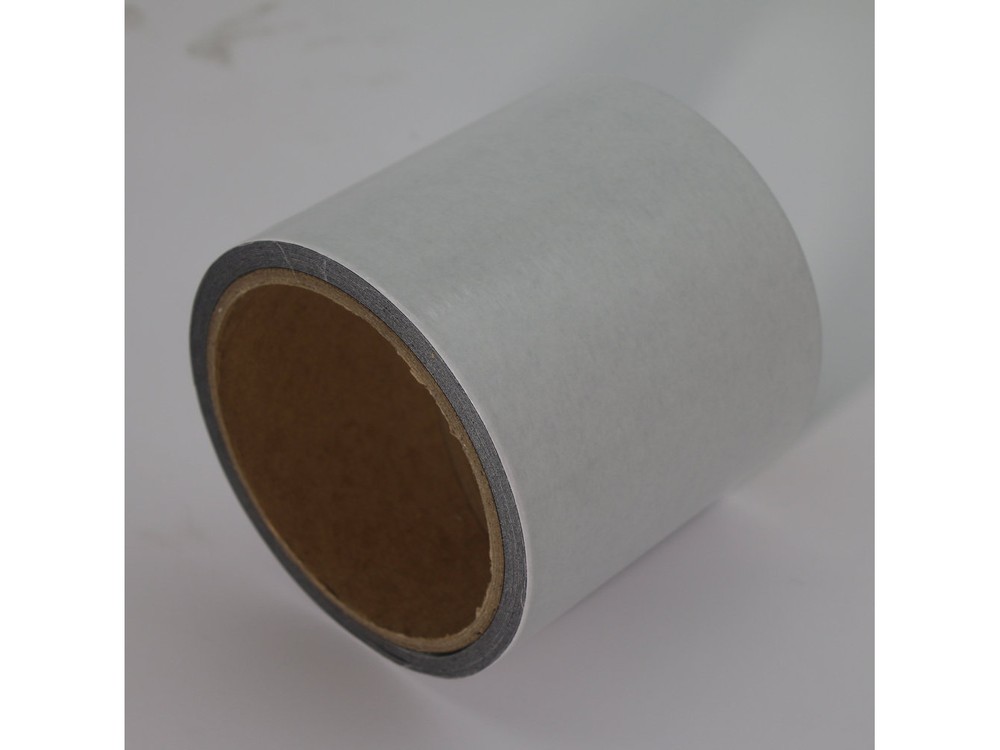
Tell EJOY the bar temperature, the dwell, the film and the cycle rate and we propose a construction and ship samples so you can count changeovers yourself. Coating and laminating detail is published by the manufacturer.
This is the baseline the trial is judged against. Without it the comparison is an impression.
Plus the film being sealed. Temperature alone does not predict service life.
Cut pieces reduce fitting time and scrap; send the bar dimensions if so.
Same machine, same film, same operator pattern. Samples ship free, so the cost is time.
On changeovers per shift under your own conditions, with the line time each changeover costs. Roll price rarely decides this.
Bar temperature, dwell, cycle rate, the film being sealed, bar dimensions, whether you need cut-to-bar pieces or rolls, and the annual volume.
Only when the duty is release. Where the requirement is heat resistance without non-stick behaviour, plain glass cloth is often sufficient and cheaper.
Long enough to count changeovers across more than one shift and more than one operator, against the baseline you recorded before starting.
You have to re-source or dual-source a harness tape and the quotes you get back differ by 40% with no obvious reason. Here is the information that makes them comparable.
See recommended tapeA rattle complaint has come back from the field and you need a damping tape sourced, validated and released before the next build. Here is what the supplier needs from you.
See recommended tapeThe drawing calls for an under-hood abrasion class and you need a tape quoted against it, with evidence an auditor will accept. Here is what to specify.
See recommended tapeSend your material, temperature and environment — we'll confirm the grade and ship samples.
Request a Quote